Nationale Postcode Loterij
The Dutch Postcode Lottery supports the pilot and demonstration phases of AIR-TBC across the Democratic Republic of the Congo, Uganda and Zambia.
Read the funding announcement
AIR-TBC · Nationale Postcode Loterij
AIR-TBC asks whether a short cough recording, analysed on a smartphone, can tell a health worker within seconds whether someone is likely to have tuberculosis. No laboratory, no sputum sample and no specialist equipment are needed for that first step. The project is led by the KNCV Tuberculosis Foundation and is being taken into communities in the Democratic Republic of the Congo, Uganda and Zambia.
The innovation
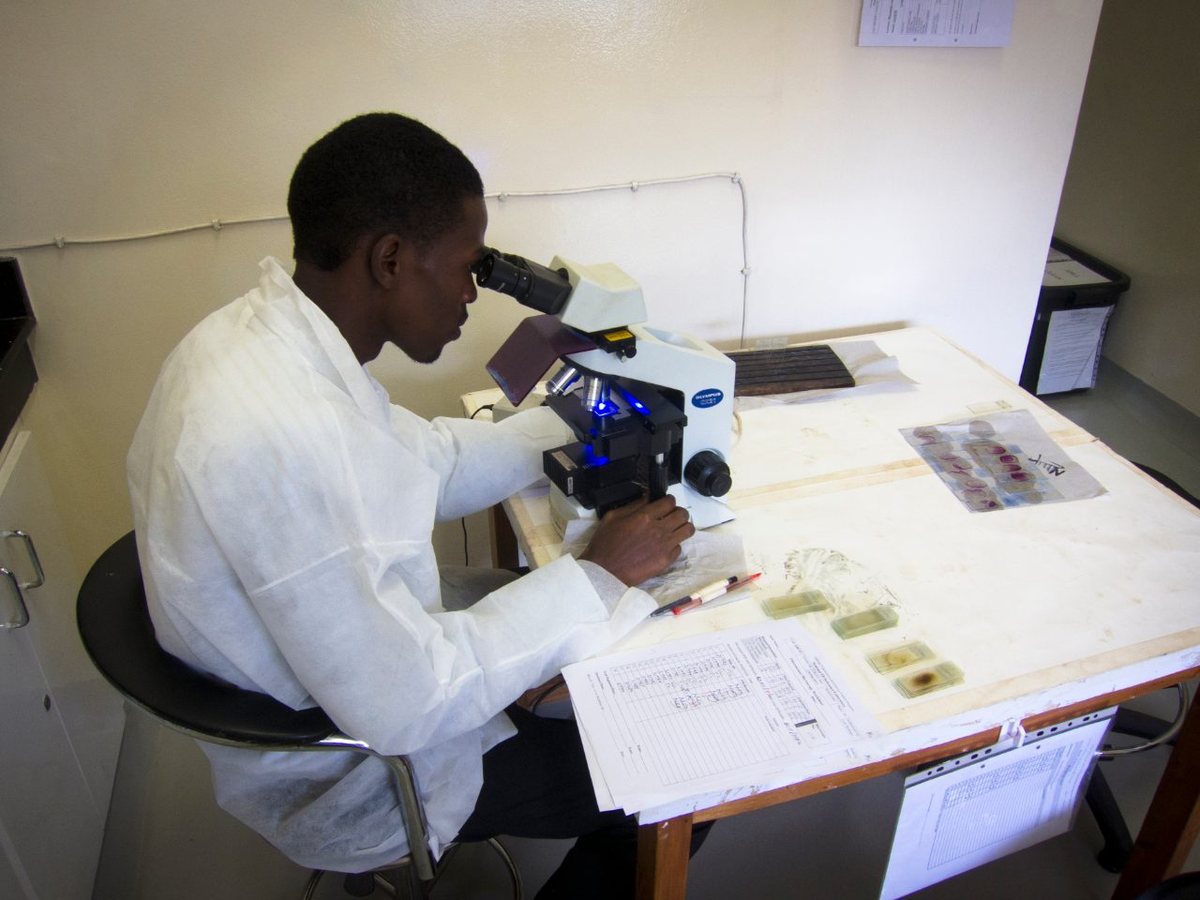
Conventional tuberculosis screening asks a lot of the person being screened and of the health system around them. It usually needs a chest X-ray or a sputum sample, a laboratory to process it, and trained staff to interpret what comes back. Each of those steps is a place where someone drops out of the pathway.
AIR-TBC moves the first step to something almost everyone already carries. A person coughs into a smartphone, the recording is analysed, and within about thirty seconds the health worker has an indication of whether tuberculosis is likely. People flagged by the test go on to confirmatory diagnosis; people who are not can be reassured without a laboratory visit.
The point is not to replace diagnosis. It is to widen the mouth of the funnel, so that far more people are screened and the laboratory capacity that does exist is spent on those most likely to need it.
Why it matters
Every barrier between a symptom and a diagnosis is time in which tuberculosis continues to spread.
The first screening step needs no laboratory infrastructure, which puts screening within reach of community settings and peripheral facilities.
Producing a sputum sample is difficult for many people, particularly children. A cough recording asks far less of the person being screened.
An answer in about thirty seconds means the conversation about next steps happens while the person is still present, rather than at a follow-up visit many never make.
Finding people sooner, including those with drug-resistant disease, shortens the window in which tuberculosis is transmitted to others.
Where the work happens
AIR-TBC begins with pilot phases and moves into large-scale demonstration, with the aim of embedding the approach in national health systems rather than leaving it as a study artefact.
One of three implementation countries in the project's screening and health-system strengthening work.
Uganda is a high-burden setting with an established tuberculosis research and programme infrastructure, and is one of the three AIR-TBC countries.
The third implementation country in the project's pilot and demonstration phases.
MRCU's specific role and sites within AIR-TBC are being confirmed and will be published here.
What the project set out to do
Reach 100,000 people with tuberculosis screening across the three implementation countries.
Give tens of thousands of people access to the diagnostics and treatment they need once screening flags them.
Build the capacity of health systems in the three countries rather than running a parallel structure alongside them.
Share results with the World Health Organization and the Global Fund to support global acceptance, and embed the innovation in national health systems.
Funding and partners
Dedicated funding supports a project led by KNCV, with learning intended to inform wider adoption.
The Dutch Postcode Lottery supports the pilot and demonstration phases of AIR-TBC across the Democratic Republic of the Congo, Uganda and Zambia.
Read the funding announcementKNCV leads AIR-TBC, bringing its international experience in tuberculosis control to the project's screening and health-system strengthening work.
Visit KNCVWork with MRCU
MRCU hosts clinical and implementation research on tuberculosis across a hospital platform, an ISO 15189 laboratory and a population cohort.
Start a conversation